Generative AI Supply Chain: 5-Year Outlook on Logistics Transformation
The logistics landscape stands at an inflection point where traditional forecasting models and rule-based automation are giving way to adaptive, creative intelligence systems. As organizations navigate unprecedented supply volatility and customer expectations for instantaneous fulfillment, the integration of advanced artificial intelligence into supply chain operations has shifted from experimental to essential. The convergence of large language models, diffusion networks, and reinforcement learning is creating a new paradigm where supply chain systems don't just react to disruptions—they anticipate, simulate, and generate optimal pathways through complexity.
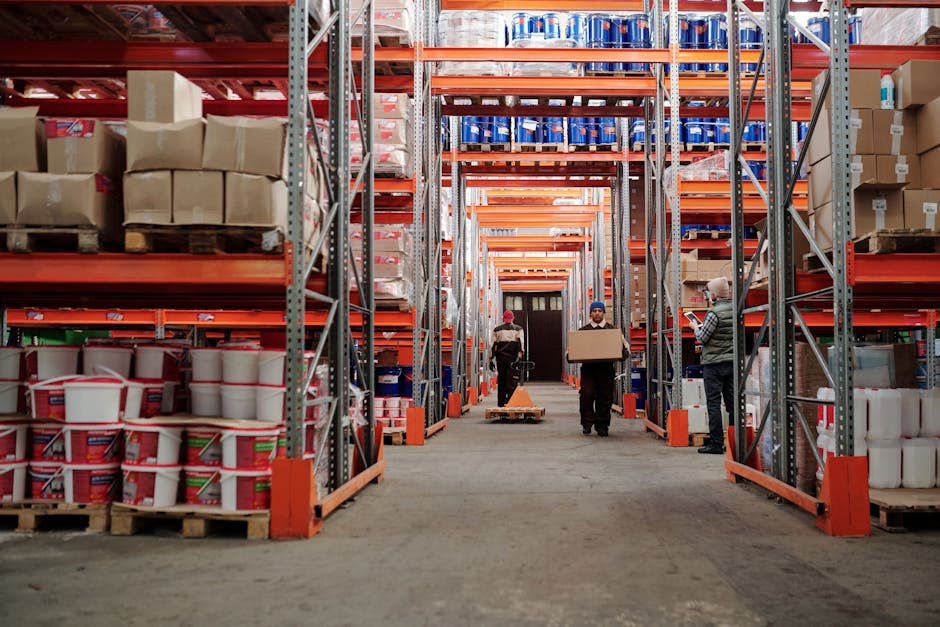
Over the next three to five years, Generative AI Supply Chain implementations will fundamentally reshape how enterprises manage procurement, inventory positioning, route optimization, and demand sensing. Unlike previous waves of digital transformation that digitized existing processes, this evolution introduces systems capable of reasoning through novel scenarios, generating synthetic training data for edge cases, and producing human-readable explanations for complex operational decisions. The timeline ahead will witness a progression from pilot deployments focused on discrete use cases to enterprise-wide orchestration platforms that treat the entire supply network as a dynamic, learning organism.
Autonomous Decision Architecture: 2026-2028 Evolution
The immediate horizon will see Generative AI Supply Chain platforms moving beyond advisory roles into autonomous execution domains. Current implementations primarily surface recommendations that human operators validate before execution. By late 2027, we anticipate that 40-60% of routine procurement decisions in manufacturing and retail sectors will occur without human intervention, governed by AI systems that evaluate supplier reliability, price trajectories, geopolitical risk factors, and inventory velocity simultaneously. These systems will generate complete sourcing strategies—including contract language variations, risk mitigation clauses, and alternative supplier cascades—tailored to specific commodity categories and regional operating contexts.
The shift toward autonomous operations will be enabled by advances in multi-modal reasoning, where AI systems synthesize structured data from ERP systems, unstructured intelligence from news feeds and social media, satellite imagery showing port congestion, and internal communications discussing quality issues. Generative AI Supply Chain platforms will produce decision audit trails that read like executive briefings, explaining not just what action was taken but the counterfactual scenarios considered and rejected. This explainability will be critical for regulatory compliance in industries like pharmaceuticals and aerospace, where supply chain decisions carry safety and liability implications.
Synthetic Scenario Generation for Resilience Planning
One of the most transformative applications emerging in the 2027-2029 timeframe involves using generative models to create realistic but synthetic disruption scenarios for stress testing supply networks. Rather than relying solely on historical disruption data—which by definition cannot capture novel risks like new pathogen outbreaks, unprecedented weather patterns, or emerging geopolitical fractures—organizations will deploy AI systems that generate thousands of plausible future scenarios combining multiple simultaneous shocks. These synthetic scenarios will test supply chain configurations against cascading failures that have never occurred but remain statistically possible.
The value proposition extends beyond risk identification to solution generation. When a synthetic scenario reveals a critical vulnerability—such as over-reliance on a single Pacific shipping route—the system will automatically generate and evaluate alternative network configurations, including repositioned distribution centers, diversified supplier portfolios, and modified inventory buffering strategies. This capability transforms Supply Chain Optimization from a periodic strategic exercise into a continuous computational process, with AI agents constantly probing for weaknesses and proposing architectural improvements. Organizations implementing AI solution development platforms will accelerate this transition, enabling custom scenario engines calibrated to industry-specific risk profiles.
Hyper-Personalized Logistics Networks
The consumer expectations established by e-commerce giants—next-day delivery, flexible return policies, real-time shipment visibility—are expanding into B2B contexts where buyers increasingly demand consumer-grade fulfillment experiences. By 2028, Generative AI Supply Chain systems will enable the economic viability of treating each customer as a segment of one, with dynamically generated fulfillment strategies that balance delivery speed, cost, and sustainability preferences at the individual transaction level.
These systems will generate micro-routing plans in real-time, considering the current location of inventory, predicted traffic conditions, carrier capacity availability, and even the recipient's historical preferences for delivery windows. A construction firm ordering materials might receive a generated delivery proposal that staggers shipments to match project phase timelines, minimizes site congestion, and consolidates loads to reduce carbon footprint—all optimized within seconds of order placement. The underlying generative models will have learned from millions of completed deliveries, understanding implicit patterns in what constitutes a successful fulfillment experience across different customer types and geographic contexts.
Workforce Augmentation and Skill Transformation
The implementation of Generative AI Supply Chain capabilities will necessitate significant workforce evolution, though the trajectory differs markedly from automation narratives focused on job displacement. The 2026-2030 period will see the emergence of hybrid roles where supply chain professionals operate as orchestrators of AI systems rather than executors of manual processes. Demand planners will shift from spreadsheet analysis to training and tuning AI models, providing domain expertise that guides algorithmic learning. Procurement specialists will focus on strategic supplier relationships and contract innovation while AI handles tactical purchasing and price negotiation for commodity items.
Educational institutions and corporate training programs will adapt curricula to emphasize prompt engineering for supply chain contexts—the ability to frame business problems in ways that elicit useful AI-generated solutions. A logistics manager in 2029 might spend their morning reviewing AI-generated network redesign proposals, their afternoon providing feedback that refines the system's understanding of regional operating constraints, and their evening approving synthetic training scenarios for onboarding new team members. This evolution represents a shift from operating the supply chain to teaching systems how to operate it more effectively.
Sustainability Optimization Through Generative Modeling
Regulatory pressures around Scope 3 emissions reporting and circular economy principles will drive adoption of Generative AI Supply Chain tools specifically designed for environmental impact optimization. By 2028, leading enterprises will deploy AI systems that generate complete product lifecycle strategies—from raw material sourcing through end-of-life recycling—optimized for carbon footprint minimization while maintaining cost and service level constraints. These systems will model trade-offs between transportation mode choices, packaging material selection, inventory positioning to reduce expedited shipping, and reverse logistics network design.
The generative capability becomes particularly valuable when designing new products or entering new markets, where AI can simulate dozens of supply chain configuration options and their associated environmental impacts before any physical infrastructure commitment occurs. A consumer electronics manufacturer might use Generative AI to model how different combinations of regional manufacturing, component sourcing, and distribution strategies affect total product carbon footprint across a five-year product lifecycle. The system generates not just quantitative impact assessments but also narrative explanations suitable for sustainability reporting and investor communications, ensuring that AI Logistics Solutions deliver both operational and reputational value.
Integration Ecosystems and Platform Convergence
The fragmented landscape of point solutions addressing specific supply chain functions—transportation management, warehouse management, demand planning, supplier collaboration—will begin consolidating around platform architectures that embed generative AI as a horizontal capability layer. By 2029, we anticipate that enterprises will operate unified supply chain control towers where a single generative model trained on the organization's complete operational data can generate insights and recommendations spanning previously siloed functions.
This convergence will be technically enabled by advances in foundation model architectures that can ingest heterogeneous data types—time series demand signals, geospatial coordinates, contractual terms in natural language, visual data from warehouse cameras—and reason across them holistically. A single prompt like "optimize Q4 inventory positioning for the Northeast region considering predicted weather patterns and retail promotion calendar" will trigger coordinated adjustments across procurement volumes, warehouse transfer orders, carrier capacity reservations, and retail allocation plans. The platform will generate a complete orchestration plan with human-readable justification, executable API calls to downstream systems, and sensitivity analyses showing how the recommendation changes under different assumption scenarios.
Conclusion
The trajectory of Generative AI Supply Chain evolution through 2030 points toward systems that function less like tools and more like collaborative reasoning partners—capable of creative problem-solving, continuous learning from operational outcomes, and generating novel solutions to unprecedented challenges. Organizations that treat this transition as merely a technology upgrade will capture only a fraction of the available value. The full potential emerges when enterprises reimagine their operating models, decision rights, and workforce capabilities around AI-augmented intelligence. As these systems mature, they will increasingly incorporate broader business context, including financial constraints, strategic priorities, and corporate values, becoming integral to how organizations compete. The convergence of generative AI with supply chain operations represents a parallel evolution in adjacent domains, notably Intelligent Automation for retail environments, where similar adaptive AI architectures are transforming customer experience and inventory management. The enterprises that move decisively in the 2026-2028 window to establish generative AI competencies will establish compounding advantages as these systems learn, improve, and uncover optimizations that remain invisible to traditional analytics approaches.


Comments
Post a Comment