How AI Cloud Infrastructure Powers Modern Trade Promotion Analytics
Trade promotion management in consumer packaged goods has evolved from spreadsheet-based planning to sophisticated real-time analytics systems. Behind this transformation lies a complex technical architecture that most category managers interact with daily without fully understanding how it operates. The computational demands of analyzing millions of SKU-level transactions, modeling price elasticity across thousands of retail locations, and predicting promotional incrementality require infrastructure far beyond traditional on-premise systems. Understanding the mechanics of how modern cloud-based AI systems process trade promotion data reveals why leading CPG companies have fundamentally redesigned their technology stacks over the past five years.
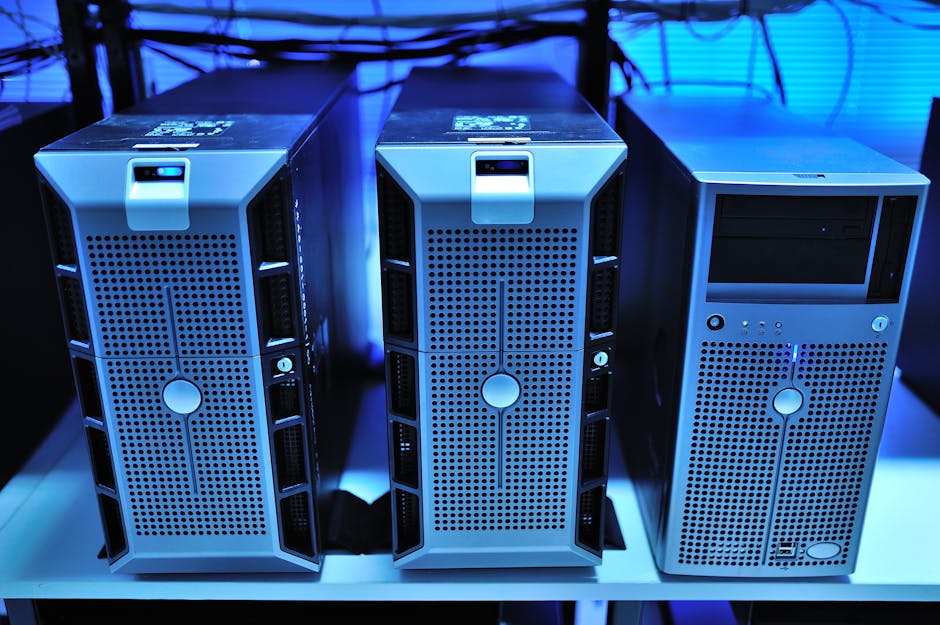
The foundation of modern trade promotion optimization rests on AI Cloud Infrastructure that operates across three distinct computational layers, each serving specific analytical functions. The ingestion layer continuously pulls data from retailer point-of-sale systems, distributor sell-in reports, and internal ERP platforms, normalizing disparate formats into unified schemas. The processing layer applies machine learning models to this data stream, calculating metrics like baseline sales, promotional lift, and category velocity in near real-time. The presentation layer delivers insights through dashboards and API endpoints that feed directly into TPM platforms where trade marketing teams execute their strategies. This three-tier architecture enables the simultaneous processing of historical pattern analysis and forward-looking demand forecasts that would overwhelm traditional database systems.
The Data Ingestion Pipeline: From Retailer Systems to Analytical Datasets
Every morning at major CPG companies like Procter & Gamble or Unilever, automated processes pull the previous day's sales data from hundreds of retail partners. This ingestion pipeline represents one of the most complex aspects of AI Cloud Infrastructure implementation. Walmart might transmit data in one format with specific SKU hierarchies, while Target uses different product taxonomies and reporting cadences. Cloud-based ingestion systems employ specialized connectors for each major retailer, applying transformation logic that maps retailer-specific product codes to the manufacturer's internal master data structure. These transformations happen within containerized processing environments that scale compute resources based on data volume, processing a regional grocer's modest daily file in seconds while dedicating substantial parallel processing power to national chain datasets that contain millions of transaction records.
The technical architecture supporting this ingestion layer relies on event-driven processing models rather than batch operations. When a retailer's FTP server receives new files, automated triggers initiate the download and validation sequence. Cloud storage systems stage the raw files while metadata services catalog their arrival time, source system, and row counts. Parallel processing frameworks then partition large files across multiple compute nodes, with each node handling a subset of records through the same transformation logic. This distributed approach allows a single day's data from a company like PepsiCo—potentially encompassing tens of millions of transactions across all brands and geographies—to move from raw retailer format to analysis-ready datasets within two to three hours. The speed differential compared to legacy systems is not merely incremental; it represents a fundamental shift from next-day reporting to same-day analytical capability.
Machine Learning Model Execution at Scale
Once data reaches standardized format, the real computational work begins. AI Cloud Infrastructure dedicates the majority of its processing capacity to running machine learning models that generate the predictive insights driving modern trade promotion decisions. A typical promotional effectiveness analysis requires multiple model types executing simultaneously: baseline sales models that isolate organic demand from promotional lift, price elasticity models that predict consumer response to different discount levels, and incrementality models that separate true new demand from pantry-loading behavior. Each model type demands different computational resources—neural networks for pattern recognition in consumer behavior run on GPU-optimized instances, while econometric models calculating price sensitivity execute efficiently on standard CPU configurations.
The cloud environment enables what data scientists call "model ensembles"—combining predictions from multiple algorithms to improve accuracy beyond what any single approach delivers. When planning a trade promotion for a product like Coca-Cola's core carbonated soft drinks, the system might run gradient boosting models trained on three years of historical promotions, time series forecasters accounting for seasonal patterns, and causal inference models estimating true incrementality. Each model generates its own demand forecast for the proposed promotion parameters. The infrastructure then weights these predictions based on each model's historical accuracy for similar promotional scenarios, producing a consensus forecast that account teams use for volume planning and ROAS calculations. This ensemble approach requires infrastructure capable of executing dozens of models concurrently, aggregating results, and delivering synthesized outputs within timeframes that support decision-making cycles.
GPU Acceleration for Deep Learning Applications
Certain analytical challenges in trade promotion management benefit dramatically from GPU-accelerated computing, particularly those involving image recognition and unstructured data analysis. Planogram compliance monitoring—verifying that products appear on retail shelves according to agreed merchandising plans—increasingly relies on computer vision models that process photographs from store audits. These deep learning models, trained on millions of labeled shelf images, can identify products, measure shelf facings, and detect out-of-stock conditions with accuracy approaching human merchandisers. Processing thousands of store images daily requires the parallel processing capabilities that only GPU infrastructure provides, with tasks that would take hours on CPU completing in minutes on specialized graphics processors.
Similarly, consumer insights analytics now incorporate natural language processing models that analyze social media sentiment, customer reviews, and call center transcripts to identify emerging trends before they appear in sales data. A CPG company launching a new product variant might monitor millions of social media mentions, applying sentiment analysis to gauge consumer reception and identify potential issues with packaging, pricing, or product claims. These NLP models operate most efficiently on GPU infrastructure, particularly transformer-based architectures that have become standard for language understanding tasks. Organizations like AI solution providers have built specialized platforms that optimize these workloads for cloud GPU environments, managing the complexity of model deployment and resource allocation.
Real-Time Analytics and the Challenge of Latency
Traditional trade promotion planning operated on weekly or monthly cycles—analyze past performance, plan next period's promotions, execute, and wait for results. AI Cloud Infrastructure enables a fundamentally different operating model where Trade Promotion Optimization happens continuously based on real-time performance signals. When a promoted product underperforms expectations in the first days of a four-week feature, cloud-based systems can detect the deviation, analyze potential causes, and recommend mid-flight adjustments. This capability requires infrastructure designed for minimal latency between data arrival and analytical output, a technical challenge that dominates cloud architecture decisions.
Achieving acceptable latency involves careful orchestration of data flow through the processing pipeline. In-memory databases cache frequently accessed reference data—product hierarchies, store attributes, historical baseline sales patterns—eliminating repeated disk reads that would introduce delays. Stream processing frameworks analyze incoming transaction data as it arrives rather than waiting for daily batch completion. Predictive models load into memory at system startup, remaining resident to provide instant inference when new data requires scoring. These optimizations collectively reduce the time from transaction occurrence to analytical insight from the days typical in legacy systems to hours or even minutes in well-architected cloud environments. For time-sensitive decisions like markdown optimization during the final days of a promotional period, this responsiveness transforms what's analytically possible.
Data Security and Retail Collaboration Frameworks
The most sensitive aspect of AI Cloud Infrastructure in CPG operations involves secure data sharing with retail partners. Effective category management requires retailers and manufacturers to analyze combined datasets—the retailer's complete category sales alongside the manufacturer's detailed product costs and trade spending. Neither party wants to expose proprietary data, yet both benefit from collaborative analytics. Cloud platforms address this through secure enclaves where encrypted data from both parties can be processed without either organization accessing the other's raw information. The analytical models run in neutral territory, producing insights both parties can access while keeping underlying data segregated.
Technical implementation varies, but most approaches employ some form of federated learning or secure multi-party computation. The retailer's cloud environment might host the combined analytical platform, with the CPG manufacturer uploading encrypted trade spending data that the system can use for calculations without the retailer's analysts ever seeing manufacturer cost structures. Alternatively, a neutral third-party cloud environment might host the analytics, with both organizations maintaining strict access controls over their contributed data. These architectures enable the joint business planning processes that have become standard between major CPG companies like Nestlé and their retail partners, supporting coordinated promotions that optimize results for both the manufacturer's brand objectives and the retailer's category performance goals.
Infrastructure Cost Management and ROI Realization
Implementing AI Cloud Infrastructure for trade promotion applications represents significant investment, typically running into millions of dollars annually for mid-sized CPG operations and substantially more for global manufacturers. The elastic nature of cloud computing—paying only for resources actually consumed—provides cost advantages over maintaining on-premise infrastructure sized for peak loads. However, poorly architected cloud deployments can generate unexpectedly high bills when inefficient code triggers excessive compute consumption or when data transfer charges accumulate from suboptimal storage designs. Organizations achieving positive ROI from their Retail Cloud Analytics investments share common practices around infrastructure optimization.
Cost-effective deployments carefully match workload characteristics to instance types. Batch processing of historical data for model training can run on lower-cost "spot" instances that utilize spare cloud capacity at discounted rates, accepting the possibility of occasional interruptions. Time-sensitive promotional forecasts that must complete within tight windows run on reserved instances with guaranteed availability. Auto-scaling policies adjust resources based on actual demand—expanding capacity during month-end closing periods when analytical activity peaks, then contracting during slower periods. Storage tiering moves older data to progressively cheaper storage classes as access frequency declines, keeping the most recent quarters in high-performance databases while archiving prior years to object storage at one-tenth the cost. These optimizations require ongoing attention from cloud FinOps specialists who monitor usage patterns and adjust configurations, but they typically reduce infrastructure costs by thirty to forty percent compared to unmanaged deployments.
Conclusion: The Invisible Engine Behind Promotional Excellence
Most trade marketing professionals planning promotions through TPM platforms never directly interact with the AI Cloud Infrastructure powering their analytical capabilities. They see forecast accuracy improvements, faster scenario analysis, and better promotional recommendations without necessarily understanding the complex technical systems generating those outputs. Yet this infrastructure represents as significant an asset as any physical manufacturing facility or distribution center, processing billions of data points to extract insights that drive promotional spending decisions worth hundreds of millions of dollars. As CPG companies face continuing margin pressure and demand ever-more precise promotional targeting, the sophistication of their analytical infrastructure becomes a genuine competitive differentiator. Organizations that master not just the strategy but the operational mechanics of cloud-based AI systems position themselves to execute trade promotions with precision their competitors cannot match, particularly as AI Trade Promotion capabilities continue advancing toward fully autonomous promotional optimization.


Comments
Post a Comment