How Generative AI in Manufacturing Actually Works Behind the Scenes
The manufacturing floor has always been a complex orchestration of machines, materials, and human expertise. Today, a new layer of intelligence is transforming this landscape from within. While much has been written about the promise of artificial intelligence in production environments, few articles dive into the actual mechanics of how these systems function in real-world manufacturing operations. This article pulls back the curtain on the technical architecture, data flows, and implementation patterns that make modern AI-driven production possible, focusing specifically on how generative models are reshaping everything from Product Lifecycle Management to real-time Manufacturing Execution Systems.
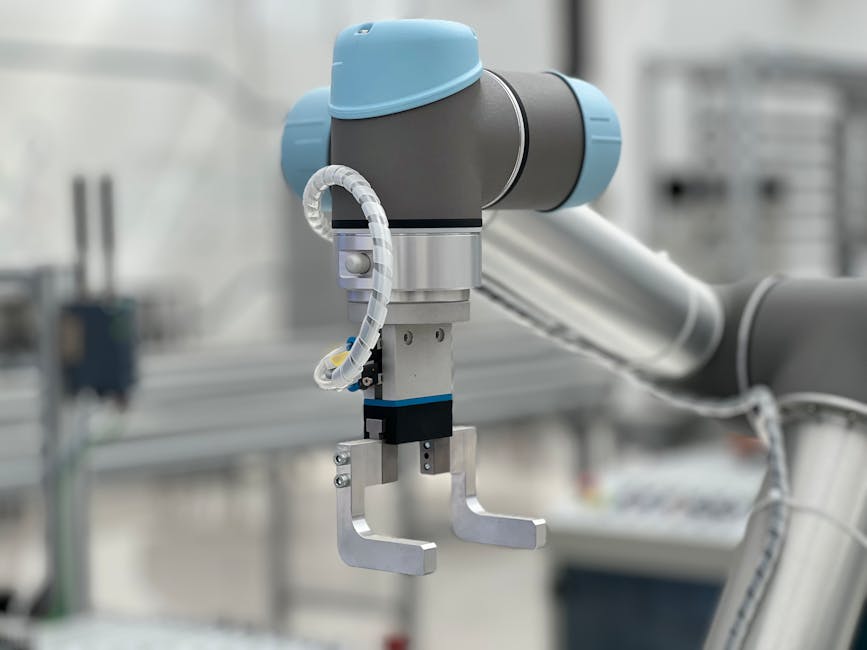
The integration of Generative AI in Manufacturing represents a fundamental shift in how production systems learn, adapt, and optimize. Unlike traditional rule-based automation or even earlier machine learning approaches that simply classified or predicted based on historical patterns, generative models create new outputs—whether that's optimized production schedules, novel design variations, or synthetic training data for quality control systems. At companies like Siemens and General Electric, these systems are already embedded in the operational stack, generating thousands of production scenarios daily to identify the most efficient pathways through complex manufacturing workflows.
The Technical Architecture Behind Generative AI in Manufacturing Environments
Understanding how Generative AI in Manufacturing operates requires examining the layered architecture that connects shop floor data to advanced AI models. At the foundation sits the data layer, where Industrial IoT sensors, Manufacturing Execution Systems, and Product Lifecycle Management platforms continuously generate streams of operational data. This includes machine telemetry, quality measurements, supply chain status updates, inventory levels, and workforce allocation data. In advanced manufacturing facilities operated by companies like Rockwell Automation and Honeywell, this data layer can generate terabytes of information daily, capturing everything from vibration patterns in CNC machines to real-time Overall Equipment Effectiveness metrics across production lines.
The next layer handles data preprocessing and feature engineering specifically tuned for manufacturing contexts. Raw sensor data gets transformed into structured features that generative models can process effectively. For instance, time-series data from production equipment gets segmented into operational phases, correlated with quality outcomes, and normalized against baseline performance metrics. This preprocessing often happens at the edge—close to the machines themselves—to reduce latency and enable real-time decision support. The sophistication of this layer directly impacts how well generative models can understand manufacturing contexts and produce actionable outputs.
At the model layer, generative architectures like transformer-based networks, variational autoencoders, and generative adversarial networks are trained on historical manufacturing data to learn the complex relationships between inputs and outcomes. These models learn to generate new production schedules that optimize throughput, create synthetic defect examples for training Quality Management Systems, or propose design variations that meet performance specifications while reducing material costs. When Boeing implements generative design systems, for example, the models generate thousands of aircraft component variations that meet strict structural requirements while minimizing weight—a task that would take human engineers months to explore manually.
Data Pipelines and Integration with Manufacturing Execution Systems
The practical implementation of Generative AI in Manufacturing depends critically on robust data pipelines that connect AI models to existing manufacturing infrastructure. Most advanced manufacturing facilities already operate comprehensive Manufacturing Execution Systems that track production orders, manage work instructions, monitor equipment status, and collect quality data. Integrating generative AI requires building bidirectional data flows that allow models to both consume real-time operational data and inject AI-generated recommendations back into production workflows.
In practice, this integration often follows an event-driven architecture. When specific conditions are detected—such as a machine approaching maintenance thresholds, unexpected quality variations, or changes in demand forecasts—these events trigger generative models to run optimization scenarios. The models generate multiple production alternatives, evaluate them against current constraints and objectives, and surface the best options to Manufacturing Execution Systems and human decision-makers. At companies like Siemens, these systems operate continuously, with generative models running thousands of optimization cycles daily across global production networks.
Organizations looking to implement these capabilities often partner with specialized providers to accelerate deployment. Building effective AI solutions for manufacturing requires not just algorithmic expertise but deep understanding of manufacturing operations, shop floor constraints, and integration requirements with existing systems like SAP, Oracle, or proprietary Manufacturing Execution Systems. The most successful implementations involve cross-functional teams that include data scientists, manufacturing engineers, IT specialists, and operators who understand the nuances of production environments.
How Generative Models Learn Manufacturing Domain Knowledge
One of the most fascinating aspects of Generative AI in Manufacturing is how these systems acquire domain expertise. Unlike rule-based systems that require explicit programming of manufacturing logic, generative models learn by observing patterns in historical data. During training, models process millions of examples of production decisions, equipment behaviors, quality outcomes, and operational contexts. Through this exposure, they develop implicit understanding of manufacturing principles—learning, for example, that certain machine configurations produce better quality outcomes, or that specific sequencing of production orders minimizes changeover times.
The training process typically involves multiple phases. Initial pretraining might use large datasets from across an industry sector to learn general manufacturing patterns. This is similar to how large language models are pretrained on broad text corpora before being fine-tuned for specific tasks. For manufacturing applications, models might be pretrained on anonymized data from multiple facilities to learn common patterns in equipment behavior, supply chain dynamics, or quality relationships. This foundation enables the models to understand fundamental manufacturing concepts and relationships.
Fine-tuning then adapts these general models to specific facilities, product lines, or manufacturing processes. During fine-tuning, models train on facility-specific data that captures the unique characteristics of particular equipment, materials, workforce capabilities, and operational constraints. A Boeing facility producing aircraft components will fine-tune models differently than a General Electric facility producing jet engines, even though both might start from the same pretrained foundation. This combination of broad and specific learning enables generative models to both leverage industry-wide patterns and respect facility-specific constraints.
Real-Time Generation and Decision Support in Production Operations
The true value of Generative AI in Manufacturing emerges during real-time operations, when models generate actionable recommendations that improve production outcomes. Consider a scenario familiar to anyone working in advanced manufacturing: a critical machine experiences unexpected downtime, disrupting carefully planned production schedules. Traditional Manufacturing Execution Systems might alert operators to the problem and require manual rescheduling—a time-consuming process that often produces suboptimal results under pressure.
With generative AI integrated into operations, the system immediately generates alternative production scenarios. Within seconds, it might produce fifty different rescheduling options, each representing a different tradeoff between competing objectives: minimizing delay to critical orders, optimizing overall throughput, reducing additional changeovers, or balancing workforce utilization. Each generated scenario includes detailed work instructions, updated machine assignments, revised material staging requirements, and predicted outcomes for key performance indicators like Overall Equipment Effectiveness and on-time delivery rates.
The system surfaces the most promising scenarios to production planners through intuitive interfaces integrated with Manufacturing Execution Systems. Planners can review options, adjust constraints, and request the system to regenerate alternatives if needed. Once a scenario is selected, the generative system automatically updates work instructions, notifies affected operators, adjusts inventory staging, and recalibrates downstream processes. This rapid generation and deployment of production alternatives represents a quantum leap beyond traditional scheduling approaches, enabling facilities to maintain performance even when facing unexpected disruptions.
Integration with Digital Twin Technology
Advanced implementations of Generative AI in Manufacturing increasingly leverage Digital Twin technology to enhance model accuracy and enable sophisticated what-if analysis. A Digital Twin is a virtual replica of physical manufacturing assets, processes, or entire facilities that updates in real-time based on sensor data and operational information. When generative models operate in conjunction with Digital Twins, they can test generated scenarios in simulation before implementing them in physical production—dramatically reducing risk and enabling more aggressive optimization strategies.
For example, when a generative model proposes a novel production sequence designed to improve throughput, the Digital Twin can simulate that sequence to verify it won't create unexpected bottlenecks, quality issues, or safety concerns. This simulation happens in compressed time, allowing hours of production to be simulated in minutes. Only scenarios that perform well in simulation advance to actual implementation. Industry 4.0 Solutions increasingly combine generative AI with Digital Twin platforms to create self-optimizing manufacturing systems that continuously explore and implement improvements.
Training Data Generation and Synthetic Manufacturing Scenarios
An innovative application of Generative AI in Manufacturing that receives less attention is using generative models to create synthetic training data for other AI systems. Manufacturing environments often face data scarcity challenges, particularly for rare events like equipment failures, quality defects, or supply chain disruptions. Training robust AI systems requires extensive examples of these scenarios, but waiting for enough real-world occurrences is impractical and expensive.
Generative models address this challenge by creating synthetic manufacturing data that captures the statistical properties and relational patterns of real scenarios while generating unlimited examples. A generative model trained on historical equipment failure data, for instance, can generate thousands of synthetic failure scenarios that exhibit realistic patterns of sensor degradation, operational context, and failure modes. These synthetic examples then train predictive maintenance models, dramatically improving their ability to detect impending failures even when real-world failure examples are limited.
Similarly, generative models create synthetic quality defect images for training computer vision systems used in Quality Management Systems. Training a vision system to detect rare but critical defects might require thousands of labeled images that don't exist in historical data. Generative adversarial networks can produce photorealistic synthetic defect images that exhibit the visual characteristics of real defects, enabling robust training of inspection systems. Companies like Siemens and Honeywell increasingly use these synthetic data generation approaches to accelerate AI deployment while maintaining high performance standards.
The Role of Human Expertise in Generative Manufacturing Systems
Despite the sophistication of Generative AI in Manufacturing, human expertise remains central to successful implementation and operation. These systems augment rather than replace manufacturing professionals, extending their capabilities and enabling them to focus on higher-value activities. Production planners, for instance, shift from manually creating schedules to evaluating AI-generated scenarios, applying their experience to select options that balance quantitative metrics with qualitative considerations the models might not fully capture.
Similarly, process engineers use generative models as powerful exploration tools that rapidly test thousands of process variations to identify promising optimization directions. The engineers then apply their deep understanding of materials, equipment, and production physics to refine and validate the AI-generated recommendations. This human-AI collaboration produces better outcomes than either could achieve independently—combining the generative model's ability to explore vast solution spaces with human expertise in manufacturing fundamentals and facility-specific knowledge.
Workforce training represents another critical human dimension. As Smart Manufacturing AI becomes embedded in production operations, operators, technicians, planners, and engineers need to develop new skills in interpreting AI outputs, providing feedback to improve models, and effectively collaborating with AI systems. Leading manufacturers invest heavily in upskilling programs that help their workforce understand how generative systems work, what insights they provide, and how to integrate AI-generated recommendations into daily operations. This investment in human capital is as crucial to successful AI implementation as the technology itself.
Conclusion: The Operational Reality of Generative AI in Production
Understanding how Generative AI in Manufacturing actually works behind the scenes reveals both the sophistication of these systems and the practical engineering required to make them operational in real production environments. From data pipelines connecting shop floor sensors to cloud-based AI models, to the complex training processes that imbue models with manufacturing domain knowledge, to the real-time generation of production alternatives that help facilities maintain performance under disruption—these systems represent a fundamental evolution in manufacturing technology. As organizations continue implementing AI Process Automation and developing comprehensive AI Production Strategies, the competitive advantage will increasingly flow to manufacturers who not only adopt these technologies but deeply understand how they function and how to integrate them effectively with existing operations and human expertise. The future of manufacturing isn't about replacing human intelligence with artificial intelligence—it's about creating powerful partnerships between the two that unlock capabilities neither could achieve alone.


Comments
Post a Comment