How AI-Driven Production Excellence Actually Works in Discrete Manufacturing
In discrete manufacturing facilities across industries—from aerospace assembly lines at Boeing to industrial equipment production at Caterpillar—the integration of artificial intelligence into production systems represents a fundamental transformation in how manufacturers achieve operational excellence. Unlike process manufacturing, discrete manufacturing involves assembling distinct items with unique bills of materials, making production orchestration inherently complex. Understanding how AI-driven systems actually function within these environments requires examining the underlying data architectures, system integrations, and decision-making frameworks that enable intelligent production management.
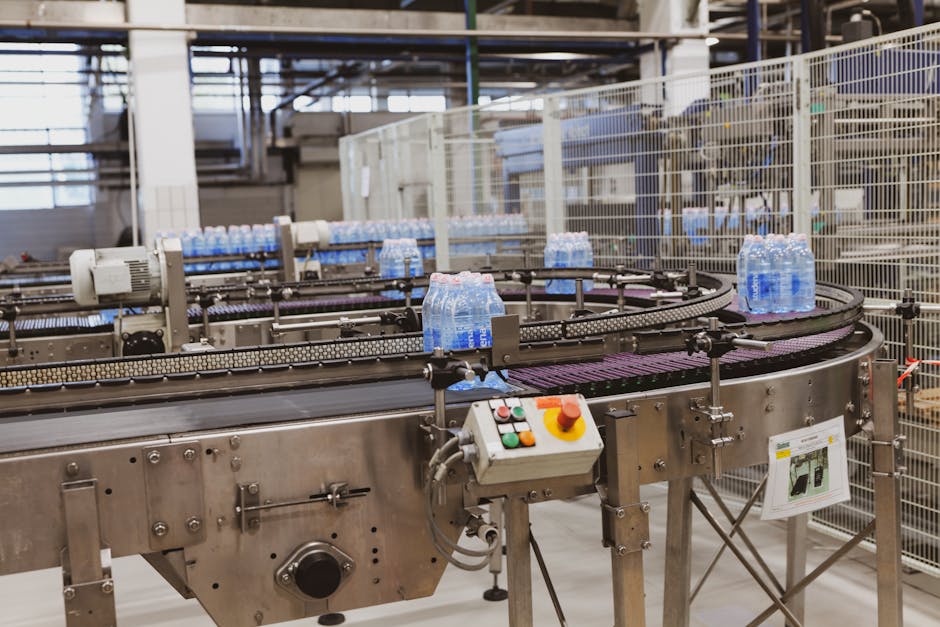
The implementation of AI-Driven Production Excellence begins with the convergence of multiple data streams from Manufacturing Execution Systems, Enterprise Resource Planning platforms, and Industrial Internet of Things sensors deployed throughout the production floor. These systems generate massive volumes of operational data—cycle times, machine states, quality measurements, material movements, and environmental conditions—that traditional analytics struggle to process in real-time. The intelligence layer sits between these operational systems and human decision-makers, continuously analyzing patterns, identifying anomalies, and recommending actions that optimize production outcomes.
The Data Infrastructure Behind AI-Driven Production Excellence
At the foundation of any intelligent manufacturing system lies a robust data infrastructure that captures, normalizes, and contextualizes information from disparate sources. In a typical discrete manufacturing environment, this infrastructure must integrate historical production data from ERP systems with real-time sensor readings from equipment, quality inspection results from automated vision systems, and supply chain status updates from logistics partners. The challenge isn't simply collecting data—it's ensuring that data from a programmable logic controller on the production floor can be meaningfully correlated with procurement lead times in the ERP system and quality defect patterns identified during final inspection.
Modern AI implementations utilize edge computing architectures that process time-sensitive data locally on the factory floor while aggregating strategic insights in cloud-based analytics platforms. This hybrid approach addresses the latency requirements of real-time production control—such as adjusting machine parameters within milliseconds to prevent defects—while enabling the computational power needed for complex pattern recognition across months or years of historical data. Companies like Siemens have demonstrated how this architecture enables predictive maintenance algorithms to identify bearing wear patterns weeks before failure, allowing maintenance to be scheduled during planned downtime rather than causing unplanned production stoppages.
How AI Integrates with Manufacturing Execution Systems
The MES serves as the operational backbone of discrete manufacturing, managing work orders, tracking material consumption, recording production events, and enforcing process compliance. AI-driven production excellence enhances MES functionality by adding an intelligent decision layer that optimizes scheduling, resource allocation, and quality management in ways that rule-based systems cannot achieve. Traditional MES scheduling relies on predefined rules and priorities; AI-enhanced systems consider hundreds of variables simultaneously—current equipment performance, operator skill levels, material availability, downstream capacity constraints, and even weather forecasts that might affect shipping schedules.
This integration happens through API connections that allow AI models to query current production status, analyze optimization opportunities, and recommend schedule adjustments that the MES then executes. For example, when a critical piece of equipment shows early signs of performance degradation detected through Predictive Maintenance AI, the scheduling algorithm can automatically redistribute work orders to alternative production lines, adjust promised delivery dates for affected orders, and trigger expedited procurement for replacement parts—all while maintaining optimal Overall Equipment Effectiveness across the facility.
Real-Time Quality Management Integration
Quality assurance in discrete manufacturing traditionally relies on sampling-based inspection at defined control points. AI transforms this reactive approach into a predictive quality management system that identifies process drift before defects occur. By analyzing correlations between process parameters and quality outcomes, AI models learn which combinations of temperature, pressure, speed, tool wear, and material characteristics produce optimal first-pass yield. These insights enable real-time process adjustments that maintain quality rather than simply detecting failures after they occur.
Vision systems enhanced with deep learning algorithms now perform 100% inspection at production speeds that human inspectors cannot match, identifying defects measured in microns while maintaining throughput rates. More importantly, these systems feed defect pattern data back into the production control loop, enabling root cause analysis that connects quality issues to specific process variations, material lot numbers, or equipment conditions. This closed-loop quality management represents a fundamental shift from detection to prevention.
Manufacturing Process Optimization Through Machine Learning
Process optimization in discrete manufacturing involves balancing competing objectives—minimizing cycle time, reducing scrap rates, extending tool life, lowering energy consumption, and maintaining consistent quality. Traditional approaches optimize one parameter at a time; machine learning enables simultaneous multi-objective optimization that discovers non-intuitive parameter combinations delivering superior results. General Electric's application of AI to turbine blade manufacturing exemplifies this capability, where algorithms identified machining parameter sets that reduced cycle time by 12% while actually improving surface finish quality—a combination that human process engineers had not discovered through decades of incremental optimization.
These optimization algorithms employ reinforcement learning techniques that treat the manufacturing process as an environment where different actions (parameter adjustments) produce different rewards (quality, throughput, cost outcomes). Over thousands of production cycles, the AI learns which actions in which contexts produce optimal results, building a process knowledge base that surpasses human expertise in identifying subtle cause-and-effect relationships. Organizations seeking to implement these capabilities can explore AI solution development platforms that accelerate the deployment of custom manufacturing optimization models.
Value Stream Mapping Enhanced by AI Analytics
Lean manufacturing practitioners use value stream mapping to identify waste and optimize flow through production processes. AI-driven production excellence enhances VSM by automatically identifying bottlenecks, quantifying waste in real-time, and simulating the impact of process changes before implementation. Instead of periodic VSM exercises conducted by improvement teams, AI systems continuously monitor value streams, alerting managers when cycle times drift from optimal ranges or when work-in-process inventory accumulates at unexpected points in the flow.
This continuous value stream intelligence enables dynamic production management that responds to changing conditions. When raw material quality variation is detected, the system can automatically adjust downstream process parameters to compensate, maintaining output quality without manual intervention. When equipment performance degrades, production routes can be dynamically reconfigured to maintain flow while minimizing the impact on overall throughput.
Supply Chain Integration and Intelligent Material Management
Discrete manufacturers face constant challenges managing complex bills of materials with hundreds or thousands of components, each with its own supply chain dynamics. AI-driven production excellence extends beyond the factory floor to optimize material procurement, inventory levels, and supplier performance. Machine learning models analyze historical consumption patterns, lead time variability, quality trends by supplier, and demand forecasts to determine optimal reorder points and safety stock levels for each component. This granular approach replaces blanket inventory policies with component-specific strategies that reduce carrying costs while maintaining production continuity.
Supply chain disruptions—a critical pain point for discrete manufacturers—can be anticipated and mitigated through AI analysis of risk factors including supplier financial health, geopolitical conditions, transportation network status, and weather patterns. When disruption risks elevate for a critical supplier, the system can automatically trigger secondary sourcing, expedited orders, or production schedule adjustments that minimize impact on customer commitments. Honeywell has reported significant improvements in supply chain resilience through AI systems that provide early warning of potential disruptions, allowing proactive responses rather than reactive crisis management.
The Human-AI Collaboration Model in Production Management
Despite the sophisticated capabilities of AI systems, effective implementation in discrete manufacturing requires thoughtful human-AI collaboration models. Production managers, quality engineers, and maintenance technicians bring contextual knowledge, judgment, and accountability that AI systems cannot replicate. The most successful implementations position AI as an augmentation tool that provides insights and recommendations while leaving final decisions to human experts who understand business context, customer relationships, and organizational capabilities.
This collaboration model manifests in various forms across manufacturing functions. Maintenance technicians receive AI-generated predictions about equipment failure risks along with supporting evidence (vibration patterns, temperature trends, historical failure modes), enabling informed decisions about whether to intervene immediately or monitor closely. Production planners review AI-optimized schedules that consider hundreds of constraints, but retain the ability to override recommendations based on customer priorities or business considerations the algorithm may not fully capture. Quality engineers use AI-identified correlations between process parameters and defect rates as starting points for deeper root cause analysis rather than as definitive answers.
Implementation Roadmap: From Pilot to Enterprise Scale
Organizations embarking on AI-driven production excellence typically follow a phased implementation approach that begins with focused pilot projects in well-defined areas. Common starting points include predictive maintenance for critical equipment, quality prediction for high-value products, or scheduling optimization for bottleneck work centers. These pilots provide proof of value while building organizational capabilities in data management, algorithm development, and change management that enable broader deployment.
Successful scaling from pilot to enterprise requires addressing several technical and organizational challenges. Data quality and consistency must be ensured across multiple production facilities, often requiring standardization of sensor deployments, data collection protocols, and naming conventions. Integration patterns established in the pilot must be replicated across different MES and ERP systems, requiring robust API management and data transformation capabilities. Perhaps most critically, workforce development programs must build the skills needed to operate and continuously improve AI-enhanced production systems, transforming production teams from process executors to system optimizers.
Measuring the Impact on Production Performance
Quantifying the business value of AI-driven production excellence requires measurement frameworks that capture improvements across multiple dimensions of manufacturing performance. Overall Equipment Effectiveness provides a comprehensive metric that combines availability, performance, and quality into a single measure of productive capacity utilization. Leading discrete manufacturers have reported OEE improvements of 8-15% following AI implementation, driven by reduced unplanned downtime, faster cycle times, and improved first-pass yield.
Beyond OEE, organizations track metrics including inventory turns (reflecting improved material management), on-time delivery performance (demonstrating better schedule reliability), and cost per unit (showing efficiency gains). Quality metrics such as defect rates, scrap costs, and warranty claims provide evidence of improved process control. The most sophisticated measurement approaches use control charts that separate common cause variation from special cause events, enabling clear attribution of performance improvements to specific AI interventions rather than random variation.
Conclusion
The mechanics of AI-driven production excellence in discrete manufacturing extend far beyond simple automation or dashboard analytics. These systems integrate deeply with MES, ERP, and quality management platforms, processing massive data streams to enable real-time optimization, predictive intervention, and continuous improvement at scales that human analysis cannot achieve. From the edge computing architecture that enables microsecond-latency process control to the machine learning algorithms that discover non-obvious parameter relationships, understanding how these systems actually work reveals both the technical sophistication required and the transformative potential they offer. As discrete manufacturers face mounting pressures around cost, quality, agility, and sustainability, implementing Generative AI Solutions that enhance production excellence has shifted from competitive advantage to competitive necessity, making deep understanding of implementation mechanics essential for manufacturing leaders navigating this transformation.


Comments
Post a Comment