How AI in Education Actually Works: The Technical Architecture Behind Smart Learning
When educators and administrators talk about implementing artificial intelligence in educational settings, the conversation often centers on outcomes and benefits. But understanding how these systems actually function—the technical architecture, data pipelines, and decision-making processes—reveals why some implementations succeed while others fall short. The infrastructure supporting intelligent educational systems involves layers of specialized algorithms, data processing workflows, and integration points that work together to deliver personalized learning experiences at scale.
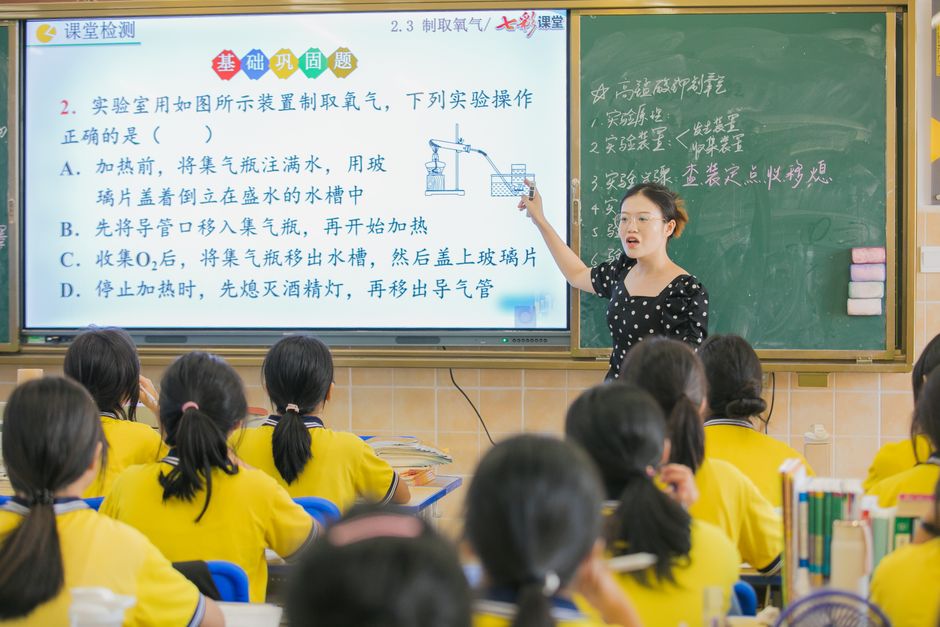
The foundation of AI in Education rests on three core technical components that process student data, generate insights, and deliver adaptive content. These components—the data ingestion layer, the inference engine, and the content delivery system—operate continuously to create the responsive learning environments that characterize modern educational technology platforms. Each layer handles specific responsibilities while communicating with adjacent systems to maintain a coherent learning experience across multiple touchpoints and devices.
The Data Ingestion and Processing Architecture
Educational AI systems begin with comprehensive data collection mechanisms that capture student interactions across multiple channels. Every quiz response, video pause, discussion forum post, and assignment submission generates structured data that flows into centralized data warehouses. These systems employ event-driven architectures where student actions trigger data packets containing metadata about timing, context, performance metrics, and behavioral patterns. The ingestion pipeline typically processes millions of events daily in large educational institutions, requiring distributed computing frameworks that can handle variable loads while maintaining data integrity.
Modern implementations utilize streaming data platforms that process information in real-time rather than batch operations. This architectural choice enables immediate responsiveness—when a student struggles with a concept, the system detects the pattern within seconds rather than waiting for overnight processing cycles. The streaming approach requires careful schema design to ensure data quality while minimizing latency. Educational Technology platforms implement validation layers that check for anomalies, duplicate submissions, and data format inconsistencies before information reaches the machine learning models that drive personalized recommendations.
The preprocessing stage transforms raw interaction data into feature vectors that machine learning models can interpret. This involves normalizing scores across different assessment types, encoding categorical variables like subject areas or learning modalities, and creating temporal features that capture learning velocity and retention patterns. Feature engineering teams design hundreds of derived metrics—time-on-task ratios, concept mastery trajectories, peer comparison percentiles—that provide richer context than raw data points alone. These engineered features often determine whether AI-Powered Learning systems can accurately predict student needs or merely generate generic recommendations.
The Inference Engine: Where Predictions Happen
At the core of AI in Education platforms sits the inference engine, a collection of specialized machine learning models that analyze processed data and generate predictions about student needs, knowledge gaps, and optimal next steps. Unlike monolithic AI systems, educational platforms typically employ ensemble architectures with multiple models handling different prediction tasks. One model might specialize in knowledge tracing—estimating a student's current mastery level for specific concepts—while another focuses on engagement prediction, identifying when students risk disengagement based on interaction patterns.
Knowledge tracing models implement sophisticated probabilistic frameworks that update beliefs about student understanding with each new data point. Bayesian knowledge tracing and deep knowledge tracing architectures maintain probability distributions over student knowledge states, accounting for factors like guessing, carelessness, and knowledge decay over time. These models don't simply track whether a student answered correctly; they infer the underlying cognitive state that produced the observed behavior. When a student answers a difficult question correctly but struggled with simpler prerequisite material, the model adjusts its confidence estimates accordingly, recognizing potential lucky guesses or knowledge gaps masked by surface-level performance.
Recommendation engines within the inference layer determine which content, activities, or resources to present next. These systems balance multiple objectives simultaneously: advancing learning progress, maintaining engagement, addressing identified knowledge gaps, and respecting time constraints. Multi-armed bandit algorithms and reinforcement learning approaches treat content selection as an optimization problem where each recommendation generates feedback that improves future decisions. Enterprise AI Training systems extend this framework to professional development contexts, where the content pool includes compliance modules, skill certifications, and role-specific competencies that must be sequenced according to organizational priorities alongside individual learning needs.
Content Delivery and Adaptive Presentation
The final architectural layer translates inference engine outputs into actual learning experiences through adaptive content delivery systems. These platforms maintain extensive content libraries tagged with detailed metadata about difficulty levels, prerequisite relationships, learning objectives, and pedagogical approaches. When the inference engine recommends specific learning goals, the delivery system selects appropriate resources while considering factors like student preferences, device capabilities, and contextual constraints such as available time or location.
Adaptive presentation goes beyond simple content selection to modify how information is displayed based on student characteristics. Natural language generation systems rewrite explanations at different reading levels, adjusting vocabulary complexity and sentence structure to match assessed comprehension abilities. Video delivery systems automatically insert recap segments or skip introductory material based on prior knowledge assessments. Interactive simulations adjust complexity dynamically, introducing variables gradually as students demonstrate mastery of simpler scenarios.
Real-Time Feedback Mechanisms
The most sophisticated AI in Education implementations create tight feedback loops where student responses immediately influence subsequent interactions. When a student submits a written response, natural language processing pipelines analyze the submission across multiple dimensions—factual accuracy, conceptual understanding, writing quality, and misconception patterns. The system generates formative feedback within seconds, highlighting specific strengths and areas for improvement while suggesting targeted resources that address identified gaps. This real-time processing requires optimized model architectures that balance inference speed with analytical depth, often deploying smaller, specialized models for immediate feedback while queuing comprehensive analysis for background processing.
Integration with Learning Management Systems
Educational AI rarely operates in isolation; instead, these systems integrate with existing learning management platforms, student information systems, and institutional databases. Integration architectures employ API layers that enable bidirectional data flow while maintaining security boundaries and access controls. The AI system pulls student roster data, historical performance records, and course structures from institutional systems while pushing back recommendations, progress reports, and intervention alerts that inform instructor dashboards and administrative reporting tools. These integration points represent critical architectural decisions—poorly designed interfaces create data silos that limit AI effectiveness, while overly permissive integrations introduce security vulnerabilities and privacy risks.
The Training Pipeline: How Models Learn From Educational Data
Behind the operational systems that serve students lies an equally important training infrastructure where machine learning models learn from accumulated educational data. This pipeline operates on different timescales than real-time inference—models might retrain weekly or monthly as new data accumulates, with training jobs consuming substantial computational resources to process millions of student interactions. The training process involves splitting historical data into training, validation, and test sets while carefully addressing temporal dependencies that distinguish educational data from static datasets.
Model training teams confront unique challenges specific to educational contexts. Student populations change annually, curriculum evolves, and assessment instruments vary across semesters, creating distribution shifts that degrade model performance over time. Training pipelines implement continuous monitoring systems that detect performance degradation and trigger retraining workflows when prediction accuracy falls below defined thresholds. This requires maintaining versioned datasets, tracking model lineage, and implementing A/B testing frameworks that compare new model versions against production baselines before deployment.
Privacy-preserving training techniques have become essential as regulations governing educational data tighten. Federated learning architectures enable models to learn from decentralized data sources without centralizing sensitive student information. Differential privacy mechanisms add carefully calibrated noise to training data and model outputs, providing mathematical guarantees that individual student records cannot be reverse-engineered from model parameters. These privacy protections introduce accuracy tradeoffs that training teams must balance against institutional compliance requirements and ethical obligations to protect student data.
Scaling Challenges and Infrastructure Decisions
Moving AI in Education systems from pilot projects to institution-wide deployments reveals infrastructure challenges that aren't apparent at small scale. A platform serving 500 students might run acceptably on modest cloud resources, but supporting 50,000 concurrent users requires distributed architectures with careful attention to database optimization, caching strategies, and content delivery networks. Load balancing becomes critical when usage patterns spike during assignment deadlines or exam periods, requiring auto-scaling infrastructure that provisions additional compute resources dynamically while managing costs.
Data storage architectures must accommodate explosive growth as systems accumulate years of student interaction data. Traditional relational databases struggle with the volume and variety of educational data, leading many platforms toward polyglot persistence strategies that employ different storage technologies for different data types. Time-series databases store interaction event streams, graph databases model concept prerequisite relationships and social learning networks, and document stores maintain unstructured content like student essays and discussion posts. Query optimization across these heterogeneous data stores requires sophisticated data engineering to maintain the sub-second response times that interactive learning experiences demand.
Observability and System Monitoring
Production educational AI systems require comprehensive monitoring infrastructure that tracks technical performance metrics alongside educational effectiveness indicators. Technical observability covers standard concerns—API response times, database query performance, model inference latency, error rates—using tools like distributed tracing and log aggregation. But educational systems also monitor domain-specific metrics: prediction accuracy across student demographics, content recommendation diversity, intervention effectiveness rates, and learning outcome correlations. These educational metrics often reveal issues that technical monitoring misses, such as models that perform well on aggregate metrics but exhibit bias across student subgroups.
Anomaly detection systems flag unusual patterns that might indicate technical failures or pedagogical problems. A sudden spike in students receiving identical recommendations could signal a model degradation issue or a curriculum bottleneck where many students encounter the same obstacle simultaneously. Engagement metrics that diverge from historical patterns might reflect interface changes that confuse users or content quality issues in recently added materials. Effective monitoring combines automated alerting with human review processes where educators and data scientists collaboratively investigate anomalies to distinguish technical bugs from meaningful educational signals.
Conclusion
Understanding the technical architecture behind AI in Education systems reveals why implementation success depends on far more than algorithm selection. The infrastructure decisions around data pipelines, model architectures, integration approaches, and monitoring frameworks determine whether these systems deliver on their promise of personalized, effective learning at scale. As educational institutions increasingly deploy AI-driven platforms, technical literacy about how these systems actually work becomes essential for administrators, educators, and policymakers making procurement and implementation decisions. The same architectural principles and technical rigor that drive AI innovation in fields like AI for Creative Industries apply equally to educational contexts, where the stakes involve shaping learning outcomes and educational equity for millions of students worldwide.


Comments
Post a Comment